Cleaning jobs in Japan offer steady work for both locals and foreigners. These roles are essential to daily operations in hotels, offices, and public spaces.
Many employers are open to applicants with basic skills and a strong work ethic. This guide explains everything about the hiring process and what to expect when working in this field.
Understanding Cleaning Work in Japan
Cleaning work is widely available across Japan in many sectors. These roles are routine-focused and require physical stamina and time discipline.
Employers value workers who can follow instructions and maintain consistency. It’s one of the most accessible job types for foreigners with proper visas.
Common Job Categories
Cleaning roles are divided by industry and location. Most tasks follow a checklist and have fixed routines.
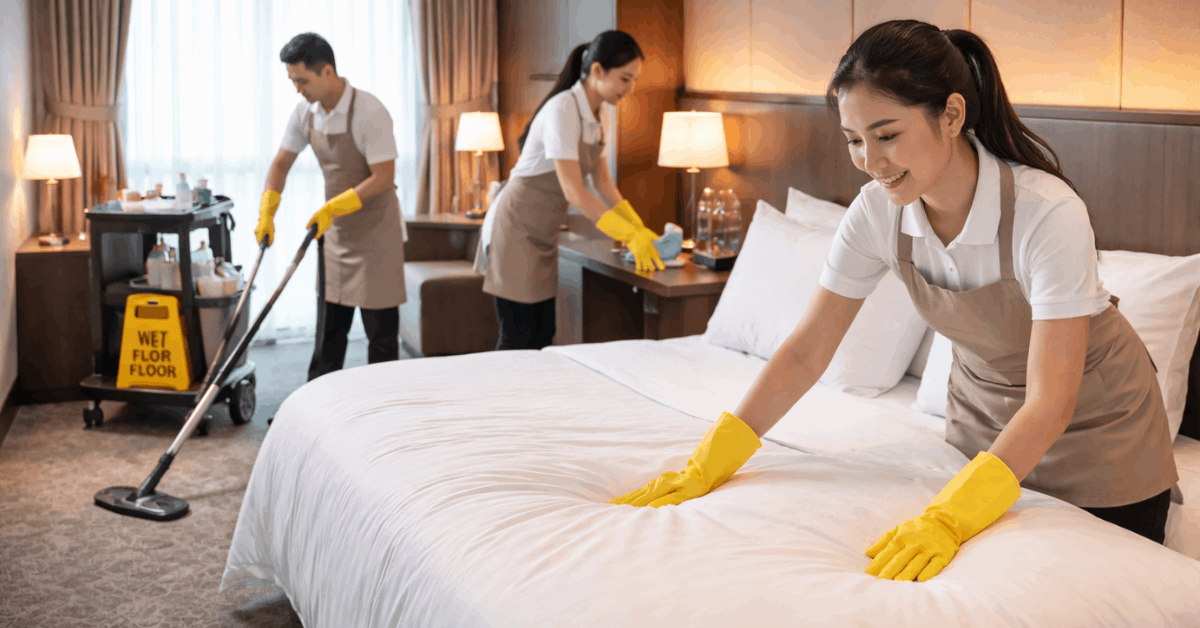
- Hotel Cleaning: This includes making beds, vacuuming, and restocking guest supplies.
- Office and Building Cleaning: Focuses on maintaining floors, bathrooms, and trash areas during or after business hours.
- Apartment Cleaning: Involves deep cleaning empty units before move-in or regular shared-space maintenance.
- Factory Cleaning: Requires sweeping, wiping, and waste disposal in production areas.
- Supermarket and Store Maintenance: Includes floor cleaning and shelf dusting, usually outside store hours.
- Medical or School Cleaning: These need higher hygiene standards, with regular disinfection procedures.
Who Can Apply for Cleaning Jobs
Anyone with legal permission to work in Japan can apply. Foreigners are welcome, especially those already residing in the country.
Students, spouses, and Tokutei Ginou (Specified Skilled Workers) visa holders often take these roles. You need to show reliability, punctuality, and basic communication skills.
Visa and Language Requirements
Employers usually request that applicants present their residence status. Even without fluency, basic Japanese helps with instructions.
- Student or Dependent Visa Holders: Part-time work is allowed with a work permit.
- Tokutei Ginou Visa Holders: This category includes building cleaning as a valid field.
- Permanent Residents: Free to work without restrictions.
- Language Level: Most jobs only need N5 to N4 level Japanese for basic commands and greetings.
Roles and Responsibilities
Cleaning work focuses on maintaining hygiene and tidiness in assigned areas. You follow fixed routines based on the time and location of your shift.
Some employers train you during the first week. You work either solo or as part of a small team.
Tasks You’ll Be Assigned
Each day, you’ll be expected to complete a list of cleaning tasks. The employer usually provides the tools and cleaning agents.
- Sweeping and Mopping: The main task in corridors, rooms, or large floors.
- Bathroom Cleaning: Includes scrubbing toilets, sinks, mirrors, and refilling soap and tissue.
- Trash Collection: You’ll need to sort and dispose of waste based on local rules.
- Surface Wiping: Tables, walls, and doors must be wiped regularly to prevent dust and stains.
- Vacuuming Carpets: Used mostly in hotels, offices, and high-end stores.
- Stock Refill: Replace consumables like paper towels or air fresheners.
Salary and Work Hours
Cleaning jobs in Japan provide fixed hourly pay or monthly salaries, depending on the contract. Some include transportation allowance and night shift bonuses.
Work hours are usually in the early morning, daytime, or late at night. You can choose from part-time or full-time contracts.
Typical Pay Ranges
Pay depends on your work hours, city, and job type. Overtime is sometimes offered.
- Part-Time Pay: Ranges from ¥950 to ¥1,300 per hour depending on the region.
- Full-Time Monthly Pay: From ¥180,000 to ¥240,000 per month.
- Night Shift Bonus: 25% extra pay for shifts after 10 PM.
- Benefits: Transportation cost refunds, uniforms, and overtime pay may be included.
Benefits and Support You May Receive
Employers often offer basic support to long-term or full-time workers. Benefits help improve job retention and reduce turnover.
While part-time workers receive fewer benefits, some companies still provide perks. Work conditions are generally clean and structured.
Common Benefits Offered
Benefits vary by employer but often include work supplies and coverage for travel.
- Transportation Allowance: Partial or full refund for daily commute.
- Free Uniforms: You’ll receive work clothes and safety gear at no cost.
- Training Period: Paid trial days to learn the job and routine.
- Paid Leave: Some full-time roles provide annual leave after 6 months.
- Insurance: Health and pension insurance for eligible full-time contracts.
Where to Find Cleaning Job Offers?
Cleaning jobs are listed across multiple job boards and hiring platforms. You can also register with dispatch companies (haken gaisha).
Listings usually state salary, location, and required documents. Applying early improves your chances during high-demand seasons.
Recommended Job Platforms
These websites and agencies specialize in cleaning or part-time work.
- TownWork: Offers many part-time listings in major cities.
- FromA Navi: Well-organized listings for night and day shifts.
- Hello Work: Public employment office with bilingual support in some branches.
- MyNavi Baito: User-friendly and filters for cleaning jobs.
- GaijinPot Jobs: For foreigners seeking English-friendly roles.
- CleanPro: Focused on building and hotel cleaning placements.
Application and Hiring Process
The hiring process for cleaning work is fast and straightforward. Most companies don’t require long interviews or tests.
You just need to show up on time and follow instructions. Some jobs offer immediate start dates after a trial day.
Step-By-Step Application Guide
Follow this process to apply and get hired quickly.
- Step 1: Search listings that match your visa type and location.
- Step 2: Submit your resume with your availability.
- Step 3: Attend an interview, either in person or online.
- Step 4: Join a short trial workday to show your ability.
- Step 5: Receive the job offer and sign your work contract.
- Step 6: Attend orientation or training before your first official shift.
Documents You’ll Need to Prepare
You must bring the correct documents to your interview or agency. These confirm your visa status, identity, and payment details.
Originals may be required during onboarding. Some companies allow document submission online.
Required Documents
Prepare these before applying to avoid delays in the process.
- Residence Card (Zairyu Card): Confirms your legal work status.
- Copy of Visa Page: Shows your permitted job type.
- Resume: Use Japanese format unless otherwise stated.
- Bank Account Info: Needed for salary transfer.
- Health Insurance Card: May be required for full-time positions.
- My Number: For tax processing and registration.
What Language Skills Do You Need
Most cleaning jobs require only basic Japanese. Being able to understand instructions is more important than speaking fluently.
You may be asked to greet customers or supervisors. Agencies sometimes help with translation during onboarding.
Language Skills to Practice
Focus on cleaning-related words and common work instructions.
- Basic Vocabulary: Words like “soji” (cleaning), “gomibako” (trash bin), and “fuku” (wipe).
- Common Phrases: Practice greetings and polite responses.
- Safety Terms: Know warning signs and emergency instructions.
- Visual Instructions: Learn to follow charts and cleaning schedules.
Agencies vs Direct Hire
You can apply through dispatch agencies or get hired directly. Both methods have pros and cons.
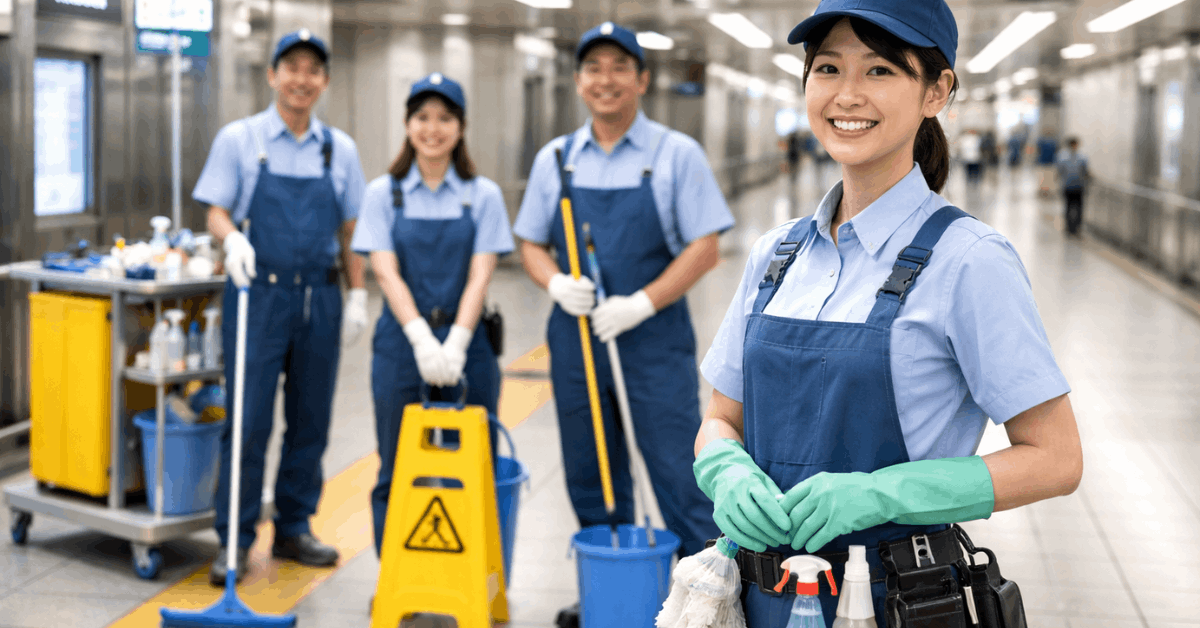
Agencies often place you faster and help with paperwork. Direct hires may offer higher pay and longer contracts.
Comparing Options
Choose what fits your situation best.
- Dispatch Agency: Good for short-term, flexible work with support services.
- Direct Hire: Better for stable income, direct contact with your employer, and job growth.
- Agency Support: Includes translation help and work preparation.
- Direct Training: You’ll receive job-specific guidance from company staff.
When Jobs Are Easiest to Find
Cleaning jobs are open all year, but hiring peaks in certain months. New store openings, hotel renovations, and holidays increase demand.
Planning your job hunt around these months can help. Applying early gives you more options and better hours.
Best Months for Hiring
These times offer the most job openings:
- March–April: Start of the school and work year.
- August: Summer holidays increase replacement shifts.
- December–January: Big demand for year-end deep cleaning.
- Post-Events: Jobs open up after concerts, conferences, or festivals.
Final Thoughts: Start Your Cleaning Work Journey in Japan
Cleaning work in Japan is simple, stable, and open to many applicants. The hiring process is fast, and the work routine is easy to learn.
If you’re reliable and ready to work, it’s a great starting point or side income. Apply today, get hired fast, and start building experience in Japan.